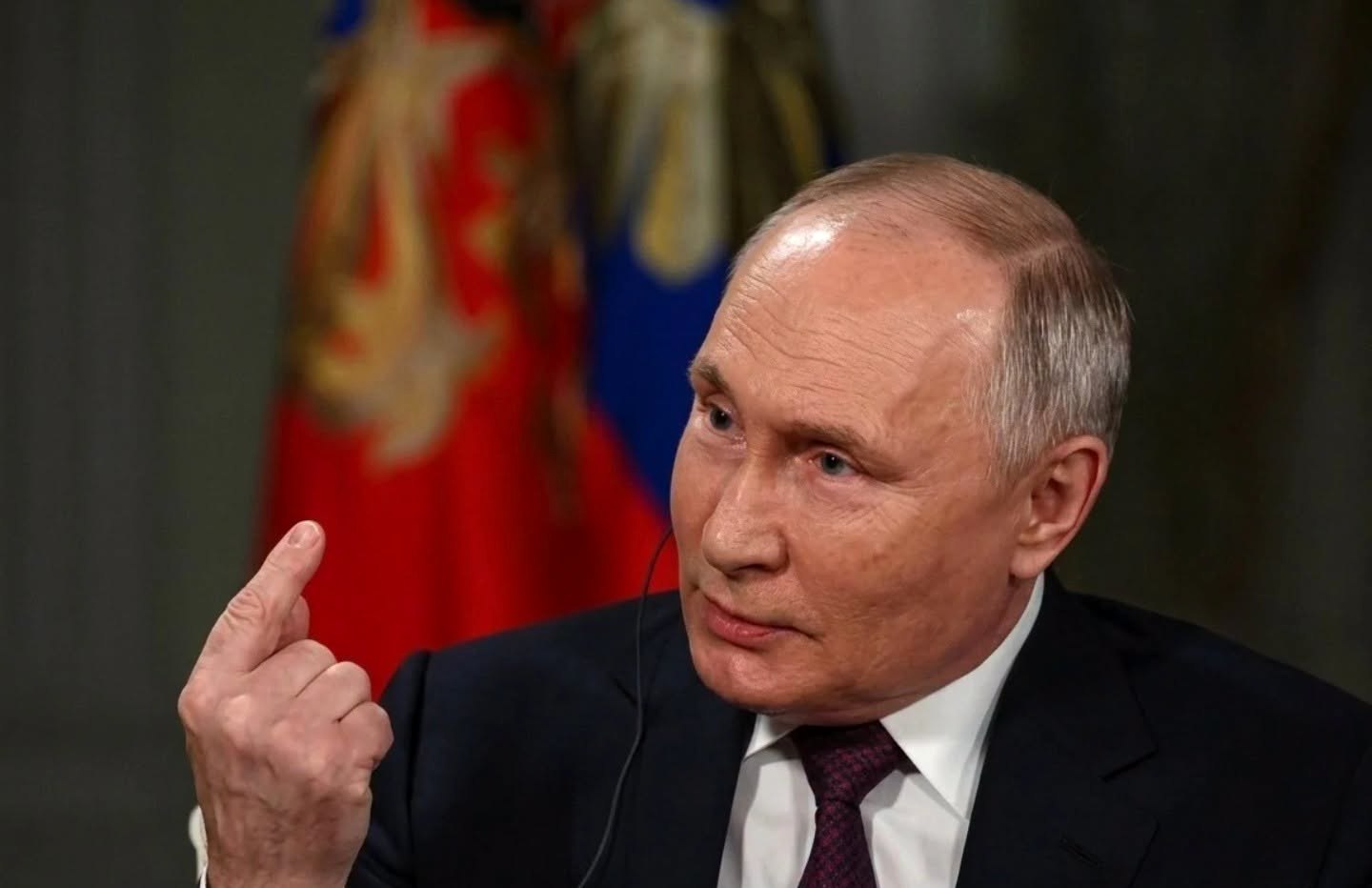
Confronted with the accusation: the reporter recalled that American politicians had called Putin a “killer” and asked for his response. Instead of immediately denying or explaining within that premise, Putin laughed and shifted the frame of his answer.
Set your own frame, rather than following the attacker’s

The first rule of mass communication: whoever defines the frame of a conversation holds the power. When you deny or justify yourself, you speak in your opponent’s terms, follow their rhythm and inadvertently become the one reacting.
But setting your own frame does not mean avoiding the subject. If a damaging issue arises and you choose silence, the audience hears only the accusation, never the other side; what remains is the stain on your reputation.
Watch how Putin handles it layer by layer. The first is nonverbal: his laugh implicitly suggests that the question is too absurd to merit discussion.
The second is verbal dismissal without appearing defensive. He says he is accustomed to attacks from every angle and on every pretext, and nothing surprises him. International counterparts are “not bride and groom”; they do not vow lifelong love. They are partners and, in some areas, rivals. That heated rhetoric, Putin argues, is Hollywood-style theatrics rather than truth.
You do not have to answer within the frame of judgment someone else has imposed.
ARTICLE TAKEAWAY · NOT A VERBATIM QUOTEThe third layer is the most revealing. He portrays the aggressive, macho style as part of American political culture and as something accepted there, but not here. In one move he rejects the accusation, casts the interviewer as a representative of a coarse culture and claims a higher moral position: respectful, calm and decent. As a technique, this is reframing at a very high level.
Power: reminding everyone who sets the pace

In political communication, status can influence how an audience receives a message. Putin uses that in the interview. When the interviewer interrupts, the Russian leader asks whether this is a talk show or a serious conversation. He argues that the interviewer asks a question, dislikes the answer and cuts him off before the audience can hear it in full. Then he turns the point around: what happened to freedom of speech?
Notably, Putin says his explanation is for the “housewives watching the programme”. The phrase belittles the interviewer while implying that his own point is simple enough for anyone to understand.
Still, power is seasoning, not the main course. Overuse it and a powerful person starts to look merely rude.
The philosopher’s frame and the golden rule: simplicity

The third move lifts an argument to a more abstract level, making the speaker seem learned and above the fray. Asked about Biden’s characterization of Putin as a leader of autocracy seeking to undermine the liberal democratic order, Putin neither denies nor becomes defensive. He says people see things from different angles and that such statements serve the interests of a country’s ruling class; nothing unusual there. He then praises the G7 for sitting down to talk, which is better than not talking. With one general principle, he implies that Biden’s words are politically motivated and therefore unreliable, while appearing untouched by them.
A philosopher cannot afford to be vague, however. Putin follows the golden rule of mass communication: keep the message simple enough for ordinary people to understand. He explains geopolitics through two familiar patterns. One is action and reaction: NATO threatens, so we defend ourselves. The other is hypocrisy: you condemn us for X while doing Y, which is worse.
One example is the aircraft carrying Bolivia’s president that was forced to land in Vienna. Putin assigns blame to the United States and other countries involved and places it alongside the Lukashenko incident. Was the former acceptable while only Lukashenko’s action was wrong? The “you too” move does not prove him right, but it undermines the other side’s claim to moral authority.
Finally, he asks listeners to imagine themselves in his position: how would you react if our forces were stationed close to your borders? We have never done that, he says, yet you call us aggressive. The appeal works on feeling rather than logic, which makes it powerful.
The cooperation frame: pragmatism rather than sainthood

Putin constructs the image of a pragmatic politician willing to cooperate. He says he proposed working with the United States on strategic security and that cooperation between the two countries could bring global security to an all-time high.
What makes this move persuasive is that the Russian leader does not pretend to be a saint. Such a pose would sound suspicious and unrealistic. Instead, he makes cooperation practical: his duty is to serve the interests of the Russian Federation, but cooperation serves both sides’ interests. Who would disagree that solving a shared problem is better than spending tax money on missiles and war?
This language may prompt an audience to question its own government: why position missiles near someone who sounds so willing to cooperate? Of course, cooperation in words and cooperation on the ground are different things. The broader lesson is that effective cooperation is not simply about being nice. It requires strategy and, as ever, power.
Challenge the premise: do not accept an unverified assumption

The reporter asks whether Russia is supplying advanced weapons to Iran. Putin denies it. The interviewer circles back, seeking agreement: surely you agree that supplying satellite technology to Iran would be dangerous? Putin rejects the premise: why discuss things that do not exist? There is nothing to discuss.
Accepting a question built on an unverified premise can make the respondent appear to concede that premise. Here Putin challenges it before entering the debate. That is a way to retain control over the scope of the conversation; whether the premise is true still needs independent verification.
Six tactics, one common thread
Six tactics, one common thread: do not merely react; lead. Whatever one thinks of Putin, the interview illustrates how a respondent tries to move from reacting to directing the story. And that covers only the words. His body language deserves its own examination.
English summary: Analysis of six persuasion tactics described in the original post: owning the frame, power moves, the philosopher frame, simple logic, cooperative framing, and challenging the premise. A lesson in leading the conversation instead of simply reacting.
References
This article analyzes media framing in an NBC News interview conducted in 2021. Its rhetorical interpretations are editorial views; the graphics in the analytical sections are illustrations, not documentary images of the events described.
- Facebook post supplied — editorial source material.
- NBC News — interview transcript (14 June 2021) — Keir Simmons interviewed Vladimir Putin in Moscow on 11 June 2021.
- Kremlin transcript (archived copy) — used to cross-check translation and the context of the answers.
Note: Statements in the article about responsibility, actions by countries and the course of conflicts reflect the arguments or accounts of the interviewee or writer, not independent confirmation. Analyzing rhetorical effectiveness does not imply endorsement of any policy, conduct or claim.
Image from the original post
Included to preserve the layout and identifying content of the shared source. Click the image to view it at a larger size.