#TEKNote – Reflections & Life
🇻🇳 CẦN – KIỆM – LIÊM – CHÍNH: Four words, a lifetime
Some teachings retain their value no matter how many years pass. They offer more than lessons in morality: they provide a foundation for self-reflection, personal growth and a more responsible way of living.
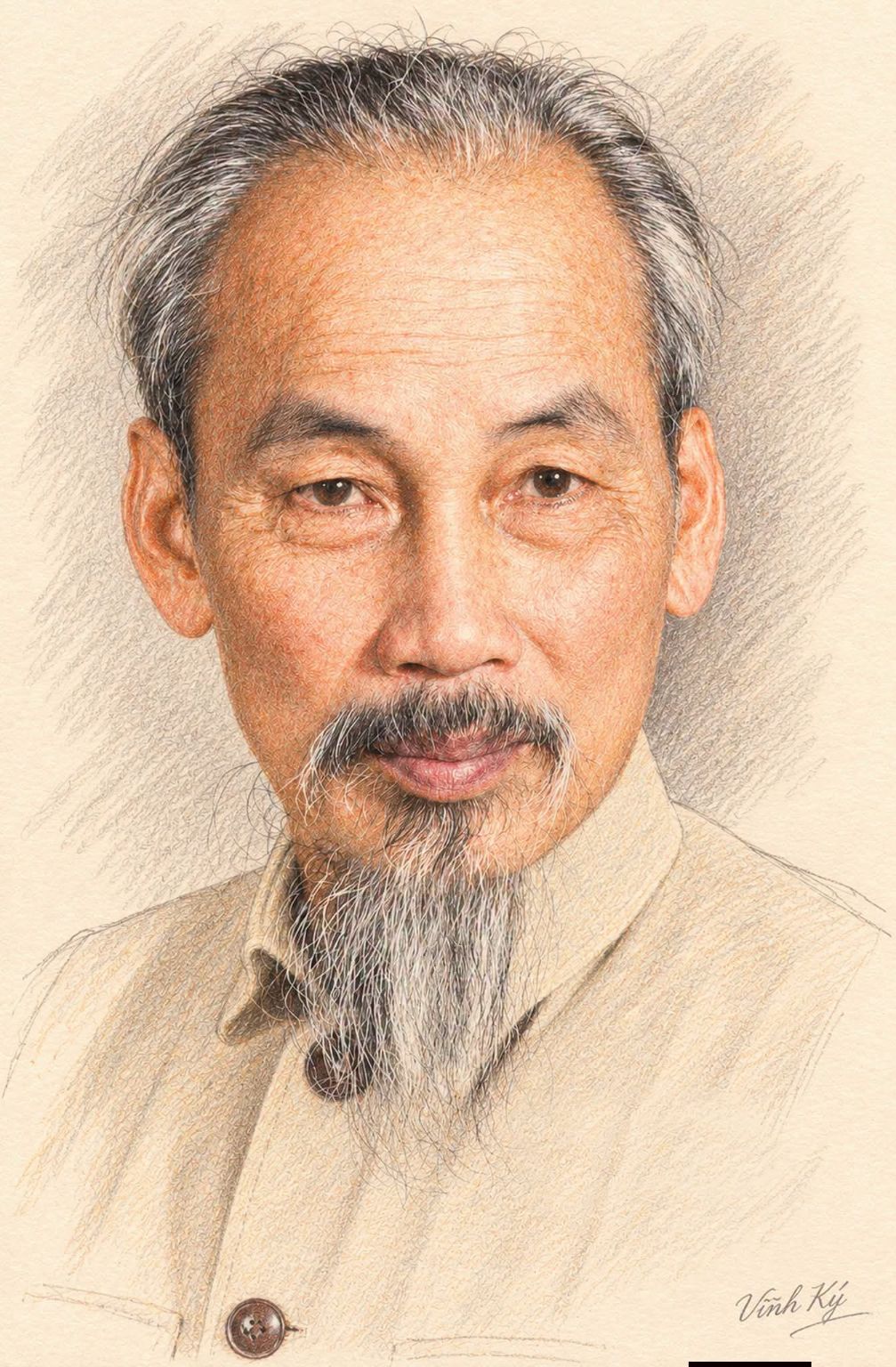
President Hồ Chí Minh once wrote:
“Heaven has four seasons: spring, summer, autumn and winter.
Earth has four directions: east, west, south and north.
A person has four virtues: diligence, thrift, integrity and uprightness.
Without one season, heaven is incomplete.
Without one direction, earth is incomplete.
Without one virtue, a person is incomplete.”
The quotation has been checked against Cần Kiệm Liêm Chính (1949). The interpretations and situations below are the author’s reflections inspired by this teaching. References.
CẦN · Diligence
– Being industrious, hardworking and dedicated to our work, facing difficulties and continuing to learn.
KIỆM · Thrift
– Valuing time, effort and resources; living frugally without being miserly, knowing what is enough while continuing to strive.
LIÊM · Integrity
– Keeping a clear conscience, avoiding greed and refusing to sacrifice conscience and dignity for personal gain.
CHÍNH · Uprightness
– Being straightforward, truthful and guided by principles, and taking responsibility for our words and actions.
CẦN – Follow work through, learn thoroughly
Diligence begins with taking our commitments seriously. It means arriving when needed, preparing carefully, paying attention to detail and following a task through to a result. Even a small promise fulfilled can reveal something about a person’s character.
In learning, diligence means reading further when we do not understand, asking when we are stuck and patiently practising what we have yet to master. At work, it means finding the cause of a mistake, correcting it properly and learning how to do better next time. Progress often grows from such consistent efforts.
Diligence also calls for prioritising important work, choosing suitable methods and looking after our health so that we can keep going. When an approach consumes considerable effort for little result, we need to pause and learn a better way. Dedication benefits from clear judgment.
Some achievements cannot be seen after a single day of effort. Yet each time we try a little harder, understand a little more deeply and complete something a little better, we develop real ability. Diligence therefore requires persistence, including on quiet days when our work receives little recognition.
KIỆM – Value what we have, understand what we need
Thrift reminds us that money and possessions represent human time and effort. A meal, an object or an income carries someone’s labour within it. Recognising this encourages us to consider how we use things and to avoid spending simply to satisfy a passing feeling.
At home, thrift can begin with buying enough, using things carefully, maintaining what we own and teaching children to appreciate work. Setting something aside for a time of need, keeping an object useful for longer or preparing a meal in a suitable quantity are all practical choices.
Time and attention deserve care as well. A meeting with a clear purpose can spare everyone unnecessary hours. Putting down the phone for an evening can give our family a kind of presence that money cannot easily replace. Sometimes the resource most worth conserving is the time passing almost unnoticed.
A frugal life still has room for learning, health, supporting relatives and helping people in difficulty. We can ask whether an expense serves a real value or merely helps us keep up with others. A sense of enough allows us to appreciate what we have while keeping resources for continued effort.
LIÊM – Keep our principles when an advantage is close
Integrity is often tested when a benefit is close at hand: money that would be easy to accept, a favour that is difficult to refuse or an opportunity in which silence would give us an advantage. Integrity asks where that benefit comes from, whether we deserve it and who might lose because of our choice.
At work, integrity can appear in giving colleagues proper credit, using shared resources for their intended purpose and disclosing interests that may influence our decisions. Something may serve our immediate advantage while still requiring us to consider fairness and responsibility.
In IT, being entrusted with a device or system access may bring someone into contact with another person’s private data. Integrity means respecting the agreed scope of work, protecting the information entrusted to us and honouring the confidence of the person seeking help. Our capabilities sometimes make it especially important to set limits for ourselves.
Keeping our integrity can mean accepting a short-term disadvantage. In return, we preserve peace of mind and the ability to face others honestly. A financial benefit can be spent, while the consequences of losing trust may remain with us for a long time.
CHÍNH – Be upright in our words and our responsibility
Uprightness appears in consistency between what we believe, say and do. We work to keep our promises, investigate what we do not understand and describe our abilities honestly. When words are supported by action, others have a reason to trust us and move forward with us.
Uprightness also requires fairness in how we judge people. We can practise listening to views that make us uncomfortable, distinguishing criticism from personal attack and examining an issue through evidence rather than personal closeness. Standing up for what is right takes courage, calm and respect for the person before us.
Another test comes when we are the ones at fault. Accepting responsibility, explaining what happened and taking steps to put it right all require courage. Being honest about our shortcomings allows us to learn what we need to learn and helps others understand how to resolve the problem with us.
Living by principles includes the ability to correct ourselves. When new evidence appears or we realise that we misunderstood, revising a view is a way of respecting the truth. Uprightness deserves to remain steady; our thinking and methods need to keep improving.
Four values supporting a person’s character
The depth of Uncle Hồ’s teaching lies in his comparison of these four virtues to the four seasons of heaven and the four directions of earth. They do not stand alone: they complement, support and complete one another.
Diligence without honesty.
Thrift without integrity.
Talent without morality.
Such success is unlikely to endure.
Reflecting on his life — from his simple clothes and rubber sandals to his modest way of living — we see that he taught through his own example as well as through his words.
In a society that keeps changing, as technology advances and material abundance grows, we have even greater reason to hold firmly to fundamental moral values.
Talent can create success.
Knowledge can create wealth.
But character creates a person’s true worth.
Success is measured not only by what we own, but also by how we work, how we treat others and how we uphold our own dignity.
At home, the lesson begins with adults
Family life makes moral values visible through everyday habits. Children can learn diligence by seeing their parents work responsibly, thrift through the way the household uses its belongings, and honesty when adults keep promises and acknowledge mistakes.
If we want children to respect others, we need to speak with consideration ourselves. If we want them to appreciate effort, we can explain where an object comes from, why it deserves care and when something new is truly needed. A simple explanation accompanied by a concrete action is often easier to understand than a general reminder.
Among relatives, these four virtues also encourage shared responsibilities, thoughtful spending, fair treatment and honest conversation. A household may still lack many things, but trust gives its members somewhere to turn as they work through difficulties together.
At work, trust is built day by day
A reputation can begin with something small: replying when promised, explaining a problem clearly, giving advance notice of a delay or completing the task we accepted. Each time we do so, we ease someone else’s concerns and provide another reason for confidence.
For a service provider, care also means being honest about professional limits, explaining costs clearly and making commitments within the scope of our responsibility. When an outcome is uncertain, the person seeking help needs to understand that uncertainty so that they can make a suitable decision.
Within a team, the same spirit needs to shape how tasks are assigned, contributions recognised and mistakes addressed. Dedicated people deserve respect, and those who speak honestly need an opportunity to be heard. Fairness and consistency in small matters can help a team develop trust from within.
In digital life, take care of conscience and truth
New tools help us work, learn and share more quickly. That convenience comes with responsibility for what we create and circulate. Before posting information, we can take a little more time to read the source, consider the context and think about its effect on the people mentioned.
Diligence may mean checking before reaching a conclusion. Thrift may mean spending time online with purpose and conserving the attention consumed by prolonged arguments. Integrity appears in respecting creative work, crediting sources and protecting private information. Uprightness appears in accurately representing what we know, correcting errors and taking responsibility for what we have published.
When using AI to help write or process information, we still need to review, check and decide what deserves publication. A tool’s speed does not lessen its user’s responsibility. The greater our ability to affect others, the more carefully we need to consider our choices.
Ask ourselves four questions each day
A significant teaching can enter our lives through a brief quiet moment at the end of a day. We can look back at how we worked, used our time, handled personal advantage and treated others. Reflection becomes more useful when it leads to a specific action we can improve tomorrow.
- CẦN: What did I follow through properly today, and what do I still need to learn?
- KIỆM: Did I use time, money and effort in a way that honours their value?
- LIÊM: Did an advantage or convenience lead me to neglect conscience and fairness?
- CHÍNH: Did I keep my word, speak honestly and accept my share of responsibility?
Some days we will be content with our answers. On others, we may recognise impatience, carelessness or insufficient effort. We can face the shortcoming and choose something to put right: fulfil an unfinished promise, explain something we expressed unclearly, make time for a relative or accept a responsibility we have avoided.
Cultivating character is lifelong work. It calls for enough seriousness to hold ourselves accountable and enough patience to continue after falling short. A small improvement maintained each day can gradually become a habit. In this way, diligence, thrift, integrity and uprightness become visible in how we live with others.
🌿 CẦN — work diligently and well.
🌿 KIỆM — live with a sense of enough.
🌿 LIÊM — keep a clear conscience.
🌿 CHÍNH — remain upright throughout life.
Four simple words.
Four enduring values.
A lifetime to learn, cultivate and put them into practice.
🇻🇳 With lasting gratitude to our beloved President Hồ Chí Minh!